

Bruce Springsteen’s Rejected ‘Dancing in the Dark’ Video Master Heads to Auction
 Write a comment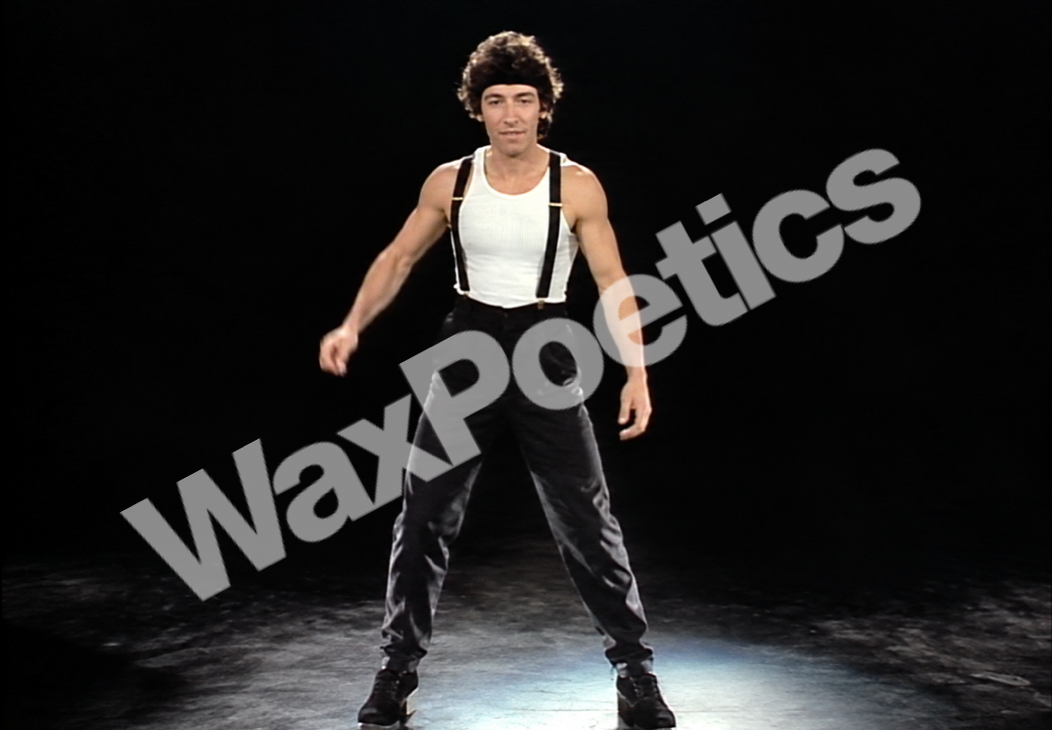
More than 40 years after Bruce Springsteen’s original “Dancing in the Dark” video was rejected, the ¾-inch U-matic master has resurfaced from the personal collection of former Columbia Records president Al Teller, revealing four performances that had remained hidden since the Born in the U.S.A. era.
More than four decades after it was rejected, an original master of Bruce Springsteen’s first attempt at a “Dancing in the Dark” music video is finally getting a second look.
Wax Poetics has announced the auction of the original ¾-inch U-matic master, which has remained in the personal collection of former Columbia Records president Al Teller since 1984.
The auction opened September 24 and runs through October 22, 2026, with bidding closing at 3 p.m. ET. Proceeds from the sale will go to organizations supporting music programs in public primary and secondary schools.
The lot also includes a commemorative plaque signed by Springsteen marking worldwide sales of 20 million units of Born in the U.S.A.
For Springsteen fans, the tape offers a rare glimpse at a version of “Dancing in the Dark” that could have become the defining visual companion to the song.
Instead, its rejection helped lead to one of the most recognizable music videos of the MTV era.
Before Courteney Cox, there was another video
The “Dancing in the Dark” video most fans know was directed by Brian De Palma and filmed in 1984. It features Springsteen and the E Street Band performing before Springsteen famously brings a young Courteney Cox onto the stage during the song.
But De Palma’s video was not the first attempt.
Filmmaker Jeff Stein, best known for his documentary about The Who, The Kids Are Alright, had previously been brought in to make a different version.
Stein’s concept was considerably more stripped back. Springsteen was placed alone on a dark set, with E Street Band saxophonist Clarence Clemons appearing toward the end.
The approach did not sit well with Columbia Records president Al Teller.
In a new interview with Springsteen biographer Peter Ames Carlin for Wax Poetics, Teller recalls watching the video in his Columbia office with Springsteen’s manager, Jon Landau.
“Jon brought the video to my office and within 10 or 15 seconds, I was thinking, ‘What is this?’” Teller says.
His main objection was the absence of the band.
“‘Dancing in the Dark’ was a big, full-band production, and my first question was, ‘Where’s the band?’”
Once the video ended, Teller made his feelings clear.
“No way. We can’t use this.”
According to Teller, Landau told him that he and Springsteen had reached the same conclusion.
The project went back to the drawing board.
That eventually led to De Palma, and to the video that became synonymous with Springsteen’s breakthrough into the MTV era.
The rejected master was almost forgotten
What happened to Stein’s original version is a remarkable story in itself.
When Teller tried to return the rejected tape, Landau told him to keep it.
Teller took it home and put it in a file cabinet.
And there it remained for more than four decades.
The tape was rediscovered while Teller and Wax Poetics were preparing the material for auction. It was subsequently sent to a specialist video production house so the aging master could be treated and assessed for playback.
That’s when another surprise emerged.
Teller had only ever watched one performance.
The original ¾-inch U-matic master actually contained four performances.
While lower-quality versions of the rejected video have circulated online over the years, the master being offered by Wax Poetics comes directly from Teller’s collection and represents the original physical source.
It provides a rare surviving document from the making of one of Springsteen’s biggest albums.
The video that was rejected helped create the famous one
There is an irony at the heart of the story.
The failed version of “Dancing in the Dark” helped lead directly to the version that became a classic.
“It was the rejection of this video that led to getting Brian De Palma and that moment with a then-unknown Courteney Cox that everyone remembers,” Teller says.
The final video was a very different proposition.
Instead of an isolated Springsteen performing against a dark background, De Palma’s version leaned into the energy of a live performance. Springsteen and the E Street Band are at the centre of the action, while Cox’s appearance provides the memorable closing sequence.
The result became an important part of the Born in the U.S.A. campaign and helped expose Springsteen to a new generation of MTV viewers.
The rejected version, meanwhile, effectively became a footnote.
Until now.
From a file cabinet to an auction
For collectors, the physical master is the centrepiece of the sale.
But the story surrounding it arguably makes the item even more interesting.
Teller was not a distant observer of Springsteen’s career. As president of Columbia Records, he was involved with the artist during a crucial period, including the arrival of Born in the U.S.A.
Teller’s career also included work with major artists including Billy Joel, Elton John, Tom Petty and George Michael. He was involved in bringing Def Jam to Columbia and played a role in the changing relationship between hip-hop and the major-label music business.
His collection therefore offers a personal connection to an important period in popular music.
The Wax Poetics interview with Teller and Peter Ames Carlin explores that history in greater detail, including Teller’s early support for Springsteen, the rise of Born in the U.S.A., and the story behind the forgotten video.
The sale will support music education
The auction is also being used to support a cause that matters personally to Teller.
Proceeds will go to organizations supporting music programs in public primary and secondary schools.
Teller has spoken about the importance of giving young people the opportunity to make music together and learn how to function as part of a group.
Whether that happens through an orchestra, chamber ensemble or jazz band, he believes those experiences can give students an understanding of collaboration that extends beyond music.
That means the auction is about more than a rare piece of Springsteen memorabilia.
A tape that once represented a rejected idea from the Born in the U.S.A. era will now help support opportunities for a new generation of musicians.
A lost chapter in Springsteen’s MTV story
The original “Dancing in the Dark” master offers a fascinating look at what might have been.
Had the Stein video been approved, the visual history of one of Springsteen’s biggest songs could have looked very different.
Instead, the rejection led to Brian De Palma, Courteney Cox and one of the most familiar images of Springsteen’s career.
For more than 40 years, Teller’s copy of the rejected version sat quietly in a file cabinet.
Now it has resurfaced, complete with four performances that Teller did not even realize were there.
Wax Poetics’ auction runs from September 24 through October 22, 2026, with bidding closing at 3 p.m. ET.
For Springsteen collectors, it represents a chance to own an unusually direct piece of the Born in the U.S.A. story. For music fans more generally, it is a reminder that even some of the most familiar moments in pop culture history can begin with an idea that almost nobody remembers.
Watch the video below:


Log in with
or post as a guest
Be the first to comment.