·
8 months ago
Mmmmmm… like sitting in your favourite chair, relaxing into a good, long novel that isn’t real but is true, thinking Lana but feeling Lizzy…. mmmmmmm.


 1 Comment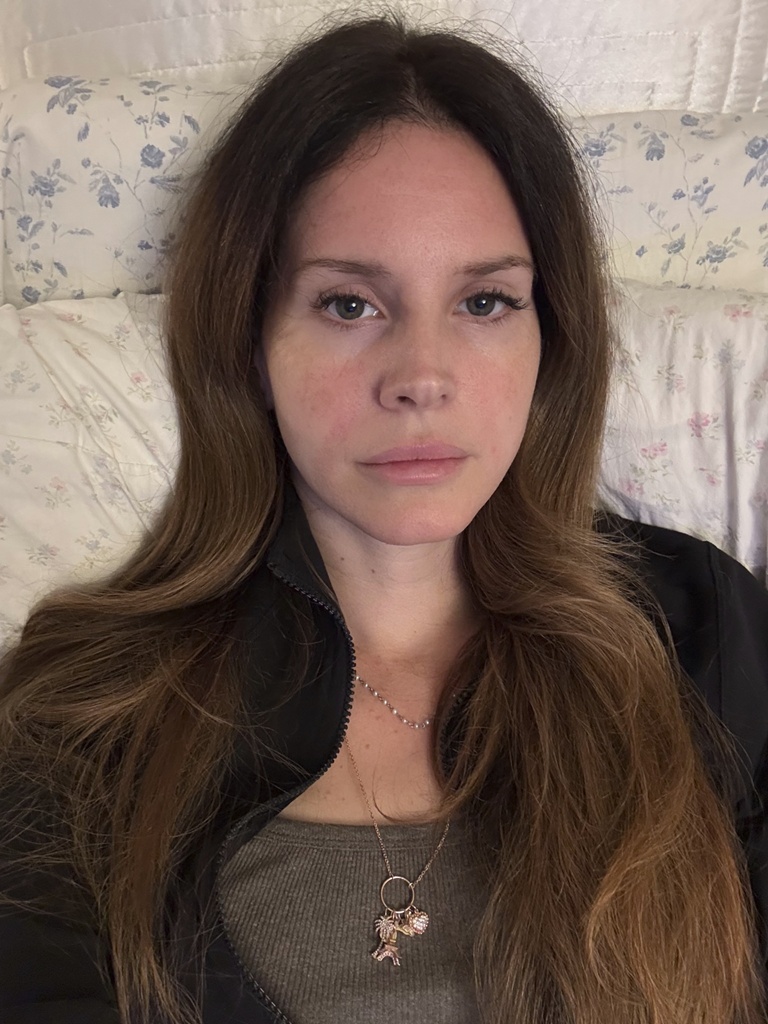
Pop music treats reinvention like oxygen. Every few years, artists are expected to shed their skin, rename the era, rewrite the narrative. But Lana Del Rey never followed that script. Instead of burning down her mythology, she slowly let it dissolve, moving from cinematic fantasy to diaristic confession without ever announcing a transformation. What looked like reinvention was something quieter, and arguably more radical: evolution.
Even before the world knew her as Lana Del Rey, the artist born Lizzy Grant was already exploring the same themes of longing, fatalism, and mythic Americana. Her 2010 debut album, released under the slightly different spelling Lana Del Ray, hinted at the cinematic instincts and emotional core that would define her later work. The name changed, but the vision did not.
This week, Lana Del Rey released her new single White Feather Hawk Tail Deer Hunter. It is a quietly striking introduction to her forthcoming tenth studio album, Stove, expected in a few months’ time. If you were looking for a dramatic “new era” reveal or a sonic shock, you will not find it here.
Instead, you will find something far more Lana.
Classed loosely as lo fi country folk, White Feather Hawk Tail Deer Hunter leans into atmosphere over immediacy. It is cinematic in tone but restrained in execution, built around sparse instrumentation and expressive strings that subtly twist as the track unfolds. It does not swell toward a chorus designed for playlists. It lingers. It breathes. It feels less like a single engineered for radio and more like a mood piece, something you sit with rather than scroll past.
Vocally, she delivers one of her most understated performances in years. Her signature hushed, breathy tone carries the song, occasionally slipping into a half spoken cadence reminiscent of her 2023 track A&W. It is intimate and almost conversational, as if you are overhearing a thought rather than witnessing a performance. That quality has always been central to her appeal. She does not project outward so much as allow the listener to lean in.
There is still mystery to her, and there always has been. But it no longer feels constructed in the way it once did during the heightened Americana of Born to Die. The myth, the tragic glamour, the doomed romance, and the Hollywood sadness, was never entirely abandoned. It simply softened at the edges. Over time, the persona became more interior.
That gradual shift is what people often mistake for reinvention.
In truth, Lana has rarely chased trends or attempted to reposition herself in the way pop culture expects. She does not pivot for the algorithm. She does not adopt aesthetics for shock value. Even the promotional image for her new single, essentially a selfie taken at home with no elaborate styling or cinematic staging, reflects that refusal. It is unvarnished and almost casual. That understatement has become part of her appeal. In an industry obsessed with spectacle, simplicity reads as confidence.
Her following has grown into something closer to a cult than a conventional fanbase. Devoted, protective, and deeply invested. It is not built on reinvention but on trust. Fans return because they recognise her voice, not just the literal one, though that too is unmistakable, but the emotional register. Few artists possess such a distinctive vocal identity. Fewer still maintain it across more than a decade without dilution. She is often voted among the best vocalists of her generation, but technical praise only tells part of the story. What sets her apart is the way her delivery feels inhabited.
Then there is the writing.
Her songwriting has gradually shifted from stylised archetypes to something more plainly autobiographical. With Stove, she has described the project as having a country flair and a Southern Gothic aesthetic. She has admitted it became more autobiographical than she initially intended, adding six additional songs as the record took shape. Longtime collaborator Jack Antonoff returns, alongside Drew Erickson and country songwriter Luke Laird. The creative team suggests continuity rather than rupture. It signals evolution within a familiar language.
When you listen to her now, the lyrics often feel less like character studies and more like diary entries. They are specific but strangely universal. You can project your own life into them. At times it feels like she is speaking directly to you, or perhaps to a version of yourself you do not often revisit. Creating that feeling of intimacy is rare, and keeping it genuine over time is even rarer.
I saw her in November 2019 at Nashville’s Nashville Municipal Auditorium. What struck me was not theatrical reinvention or grand transformation. It was presence. The atmosphere in the room felt suspended and almost reverent. She moved through songs with the same understated gravity she brings to record. There was no desperate bid to prove relevance and no exaggerated attempt to reframe her image. Just the music, delivered with conviction.
That consistency is precisely why the myth of reinvention never quite fit her.
Where some artists build careers on sharp turns, Lana has built hers on deepening grooves. The early myth has not disappeared. It has folded inward. The glamour became domestic detail. The tragic heroine became a woman reflecting on family, memory, faith, and landscape. With each release, the mask thinned, not dramatically but incrementally.
White Feather Hawk Tail Deer Hunter feels like the next step in that progression. Not a rebrand. Not a pivot. A continuation.
Pop rewards shock value. It rewards spectacle. It rewards the dramatic reveal of a new self. Lana chose something else. She stayed. She deepened. She refined. The myth was never erased, only softened, made more human with each record. Reinvention might be louder, but consistency is harder. And over the course of a decade, she has shown that becoming more yourself can be the boldest move of all.
And maybe that is the real radical act. Not becoming someone new every cycle, but becoming more yourself, album by album and line by line, until the myth turns into memoir.