

From Eminem to Trump, Beyoncé to McCartney: Why Dolly Parton Was Loved by So Many
 Write a comment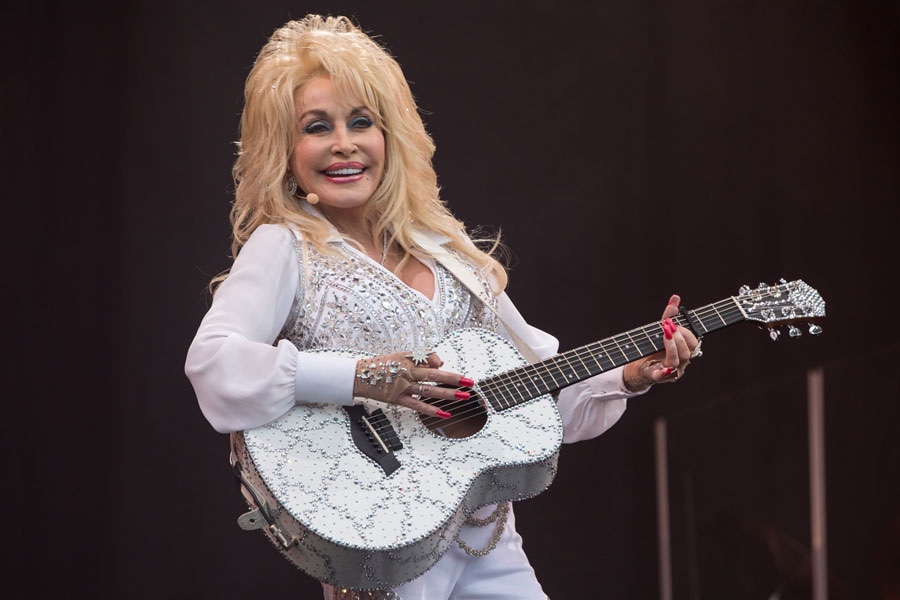
From Donald Trump to Eminem, Beyoncé to Sir Paul McCartney and Sir Mick Jagger, Dolly Parton had a rare ability to make people from completely different worlds feel as though she belonged to them.
When Dolly Parton died at 80, the tributes came almost immediately, and from almost everywhere.
There were the people you would expect. Reba McEntire, Kacey Musgraves, Carrie Underwood, Keith Urban and countless others from the country music world shared emotional farewells to the woman who had spent nearly seven decades at the heart of their industry.
But then came everyone else.
Donald Trump paid tribute to Parton and ordered American flags to be lowered to half-staff across the United States until September 1 in her honour.
Beyoncé remembered her as an inspiration. Paul McCartney spoke of her songwriting, philanthropy and remarkable career. Elton John paid tribute to a unique and irreplaceable artist. Sabrina Carpenter, who had worked with Parton, remembered her warmth and wisdom. Jeff Bezos and Apple's Tim Cook were also among the business leaders mourning her loss.
And then there was Eminem.
Britain loved Dolly too
Dolly Parton's connection with the UK had been clear for years, perhaps most famously at Glastonbury Festival in 2014.
She played the Pyramid Stage to one of the biggest crowds of the festival, with more than 100,000 people reported to have watched her set. It became one of the defining performances of that year's Glastonbury, with the British press embracing her just as enthusiastically as audiences back home.
For a country artist from Tennessee, it was a remarkable sight. An American legend stood on a British festival stage and had tens of thousands of people singing along to songs that had crossed generations and an ocean.
The official Glastonbury Festival website later noted that Parton appeared on the front page of every national UK newspaper following the festival. Her BBC interview was also reported to have been the most viewed item of the entire weekend's coverage.
It was another example of something that had become increasingly obvious throughout Dolly's career. She was an American star who had become deeply familiar to British audiences too.
Her reach went much further than Britain. Her music and charitable work reached audiences across countries including Australia, Canada, Ireland, New Zealand and South Africa, while her songs continued to find new listeners around the world.
People did not necessarily have to be country music fans to know Dolly. They knew "Jolene". They knew "9 to 5". They knew "I Will Always Love You". They knew the woman with the big hair, the rhinestones, the unmistakable laugh and the even more unmistakable voice.
The Eminem tribute that said everything
Perhaps the most unexpected and personal tribute came from the Detroit rapper.
Eminem shared a letter Dolly had privately sent him after they were both inducted into the Rock & Roll Hall of Fame in 2022.
They never got their long-awaited meeting.
Parton had watched Eminem perform at the ceremony, but the two never managed to connect backstage. Afterwards, she sat down at her typewriter and wrote him a personal note congratulating him on his induction and praising his achievements, despite acknowledging that rap was not a genre she knew particularly well.
Four years later, Eminem still had the letter.
Following Parton's death, he shared it publicly, explaining how much her words had meant to him and expressing regret that he never got the chance to meet her properly.
The response was enormous. But the reason the story resonated was bigger than Eminem.
It was Dolly in miniature.
She did not need to understand someone's world completely to appreciate the person standing in front of her.
She could recognise talent, hard work and humanity, whether that person played a banjo, a guitar or made rap records.
And apparently, people remembered that.
She somehow belonged to everybody
That may be the simplest explanation for Dolly Parton's extraordinary cultural reach.
She was a country star, but she was never only a country star.
She was the songwriter behind songs such as "Jolene" and "I Will Always Love You". She was the woman who made "9 to 5" into an anthem for working people. She was an actress in 9 to 5 and Steel Magnolias. She built Dollywood into a major attraction. She became a bestselling author and one of America's most recognisable entrepreneurs.
And then there was the philanthropy.
Through the Imagination Library, Parton helped put hundreds of millions of books into the hands of children around the world. Her generosity also stretched into medical research, disaster relief and countless causes she supported away from the cameras.
That mattered because people did not just see Dolly as somebody who had become famous.
They saw someone who had done something with being famous.
She came from a large, poor family in East Tennessee and never seemed embarrassed by where she came from. In fact, she made her Appalachian roots part of her identity, without ever allowing them to become a limitation.
She became one of the most successful women in entertainment while remaining recognisable as the woman who came from the Smoky Mountains.
Even politics could not quite claim her
Perhaps one of the strangest things about the reaction to her death is the political range of the tributes.
Trump ordered the flags down.
Barack Obama and Kamala Harris also praised her legacy, particularly her commitment to literacy and helping others.
Dolly had spent much of her career deliberately refusing to become a partisan symbol.
The Trump administration offered her the Presidential Medal of Freedom twice. She declined both opportunities, initially because of her husband's illness and later because of the pandemic. She also expressed concern about accepting such an honour because she did not want her charitable work to appear politically motivated.
That decision tells you something important about her.
Dolly understood that her audience was bigger than any political party.
She had Republican fans. She had Democratic fans. She had deeply religious fans. She had LGBTQ+ fans. She had people who loved country music and people who had never considered themselves country fans at all.
And she rarely demanded that they agree with her before they could love her.
Then there is Miley
For a younger generation, Dolly was not simply the woman who sang "Jolene".
She was Aunt Dolly.
Parton was Miley Cyrus' godmother in real life, and their relationship became part of Hannah Montana, where Parton appeared as Aunt Dolly. The connection between the two became one of the enduring links between country music's older generation and a new generation of pop stars.
Miley's reaction was therefore one of the most personal.
She had not simply lost a musical legend. She had lost her godmother.
It was a fitting relationship for Dolly.
She had spent decades becoming a kind of unofficial godmother to American popular culture itself.
The country world knew. Everyone else eventually found out.
Of course, the country music community knew exactly what it had lost.
Reba McEntire's tribute was deeply personal, remembering both the first time she met Dolly and their final conversation.
Paul McCartney knew her as a fellow songwriter.
Sir Mick Jagger knew her as a fellow musical giant.
Elton John knew her as a peer.
Beyoncé knew her as a collaborator and an inspiration.
Sabrina Carpenter belonged to a generation that had grown up knowing Dolly as a cultural institution rather than simply a country singer.
Lil Nas X represented a younger generation and a different side of music, while also having his own connection to country through the huge success of "Old Town Road". He too joined the tributes.
And Eminem's story demonstrated something different again. Dolly could make an impression on somebody whose music, audience and image seemed almost completely removed from hers.
That is the unusual part.
Most artists have a demographic.
Dolly had a population.
Why Dolly became bigger than music
There are plenty of technically brilliant musicians who never become cultural institutions.
Dolly did.
Part of it was the music. She was an extraordinary songwriter with an instinct for turning complicated emotions into deceptively simple stories.
Part of it was the personality. The humour, the rhinestones, the big hair and the self-deprecating jokes made her instantly recognisable.
But the bigger reason may have been that the image was backed up by substance.
Behind the jokes was an exceptionally sharp businesswoman.
Behind the glamour was a serious songwriter.
Behind the celebrity was a philanthropist.
And behind the enormous career was someone who seemed genuinely interested in making other people feel better about themselves.
That combination is extraordinarily rare.
It is also why Dolly could mean completely different things to completely different people.
To a country fan, she was a legend.
To a songwriter, she was a master.
To a businessperson, she was an extraordinary entrepreneur.
To a child, she could be the woman who sent them a free book.
To someone who grew up watching Hannah Montana, she was Aunt Dolly.
To Miley Cyrus, she was her godmother.
To an audience at Glastonbury, she was the American legend who somehow felt completely at home on a British Sunday afternoon.
To Eminem, she was the country music superstar who took the time to sit at a typewriter and write him a personal letter.
And to millions of people around the world, she was simply Dolly.
Everybody's Dolly
That may be the most remarkable thing about the reaction to her death.
People are not only mourning a singer.
They are mourning someone who became part of the cultural fabric of their lives.
Their parents loved her. Their grandparents loved her. Their children knew her. Somehow, she belonged to all of them.
And that was true far beyond America.
Britain embraced her. Australia embraced her. Ireland embraced her. Her music continued finding new audiences across Europe, Canada, New Zealand, South Africa and other parts of the world.
From the Smoky Mountains to London, Sydney, Dublin and beyond, Dolly Parton managed something almost nobody else has.
She became everybody's Dolly.
And now, everybody is feeling her absence.


Log in with
or post as a guest
Be the first to comment.