

Interview: Police Dog Hogan Talk Reflection, Resilience and The Light At The Top Of The Stairs
 Write a comment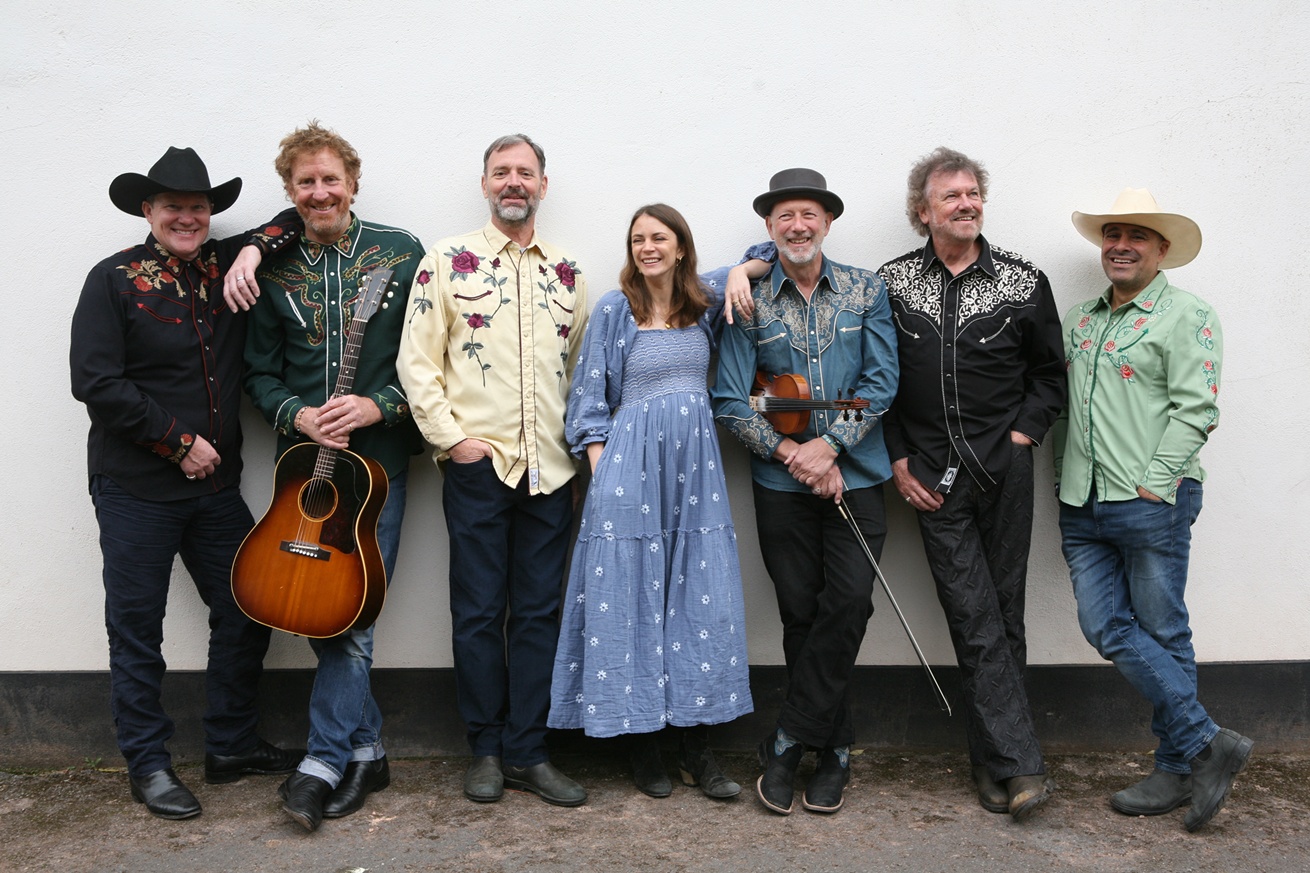
Now, with The Light At The Top Of The Stairs, the band return with what feels like their most reflective and emotionally direct record to date. Ahead of its release on April 10th, we spoke to the band about the long road to making the album, the stories behind its songs, and what keeps them moving forward after 17 years together.
Hi, congratulations on the release of your new album ’The Light At The Top of the Stairs’ on the 10th April - how was the writing and recording process?
In a word: long. We put out a near-live album called Lightning Strike in 2024 - recorded over a weekend - and that gave us the time to make a more considered record, which I hope we’ve managed. We ended up with a wealth of material to choose from, which is always a bit of a luxury.
We love the track “Passing Through’ - what was the inspiration behind this song?
It’s based on something I experienced years ago while travelling across America. I was staying at this cheap motel, and it became clear that some of the other residents actually lived there; for better or worse, it was their home. Me, I was just passing through. That was enough to go on.
When that memory suddenly came to mind again - weirdly, in the middle of a Jason Isbell gig - I scrawled down the first line there in the dark, and promptly forgot about it. A couple of weeks later I found the scrap of paper in my coat pocket.
Which track on the album was the most difficult to write/record and why?
Go Down Fighting was both the hardest and easiest to record. We messed with it for almost a year on and off - adding parts, subtracting others, revamping the middle 8 - and it still wasn’t right. In the meantime we were playing it live regularly, where it always went down well. Eventually we realised the track needed redoing from the ground up; among other things, it was too slow. It was a tough decision to take - the original recording represented a bit of a sunk cost - but once we agreed it came together very quickly.
You’ve supported Brian Wilson in the past - what was this like and did you get to meet him?
It was, in fact, the Beach Boys - or at least the iteration of the Beach Boys that was touring in 2018. We were on right before them at the Cropredy Festival. On the one hand it’s incredibly daunting, of course. On the other hand, you’re spared the agony of any kind of comparison - you don’t think, oh shit, are they better than us? Of course they’re better than us! They’re the Beach Boys!
None of us got to meet Brian - access to him was pretty tightly controlled; in retrospect, I think he was pretty frail by then - but James definitely got a picture with Al Jardine. And the band was amazing. We had a great front row view.
Do the lyrics usually come first before the music? Or vice-versa?
They can come any which ways. Sister Louise was a complete set of lyrics for years before James finally came up with a tune that worked. Sometimes it starts with a riff, or a bit melody with dummy lyrics that get replaced down the line. Sometimes certain lines insist on themselves, and you have to figure out what they mean later. Occasionally, when we’re collaborating, somebody’s orphaned lyrics meet up with somebody else’s stray tune, and the two just click. Memory can make these moments seem serendipitous, but I have a lot of early-stage phone recordings that prove most of our songs had a difficult birth.
A lot of the time James brings a complete song to the table; he’ll just play it for us, and we’ll all arrange it. In those cases I never find out what came first.
What are the biggest obstacles you’ve overcome as a band?
In the early days the main obstacle was indifference. In our first two years we played a lot of pubs where there were more people at the sound check than the gig, because the sound checks happened at happy hour.
Since then, I would say it’s the forces of entropy that can pull a band apart; it’s rare for a shared commitment to a such a project to be sustained for, in our case, 17 years. It also turns out to be one of the great secrets of being good: play together a lot for a really long time. Most bands don’t last long enough to find this out.
You’ve got a UK tour planned April- June, what are you most looking forward to about playing live? What can fans expect?
I’m looking forward to playing some of the new songs that we’ve never played live, but also reaching into what is now a pretty vast back catalogue to revive some surprising old tunes. That is the plan: to go out there with a show that’s markedly different to the one we’ve been doing for the last couple of years, and to keep it flexible enough that we can change things night to night.
If you could collaborate with any artist who would it be and why?
I can’t speak for the whole band, but I’d love to collaborate with great songwriters like the aforementioned Jason Isbell, or the Milk Carton Kids, or anyone I could learn from. But I think I can speak or the whole band when I say: we’re open to offers.
If you could create your dream band - who would you have in it?
This is always a difficult thing for me to think about about. I play a bit of dobro on stage and some nights I would dearly love to have Jerry Douglas step in and do it instead, but this is the problem: as soon as I assembled my dream band (Emmylou Harris? Steve Martin? Alison Kraus? Dave Rawlings? Taylor Swift?) I’m pretty sure they would start meeting behind my back and plotting to replace me.
What do you hope to achieve by the end of 2026?
One of things that’s kept us together is that we’re all more interested in the ride than the destination. So I hope by that time - once we’ve travelled all over the country, played all the gigs and sold all the souvenir tea towels - we’ll be right back to writing and recording. If this album earns us the right - and the wherewithal - to do another one, I’ll be happy.


Log in with
or post as a guest
Be the first to comment.