
Interview: The Great Emu War Casualties Talk Creativity, Culture, and Their Debut Album
 Write a comment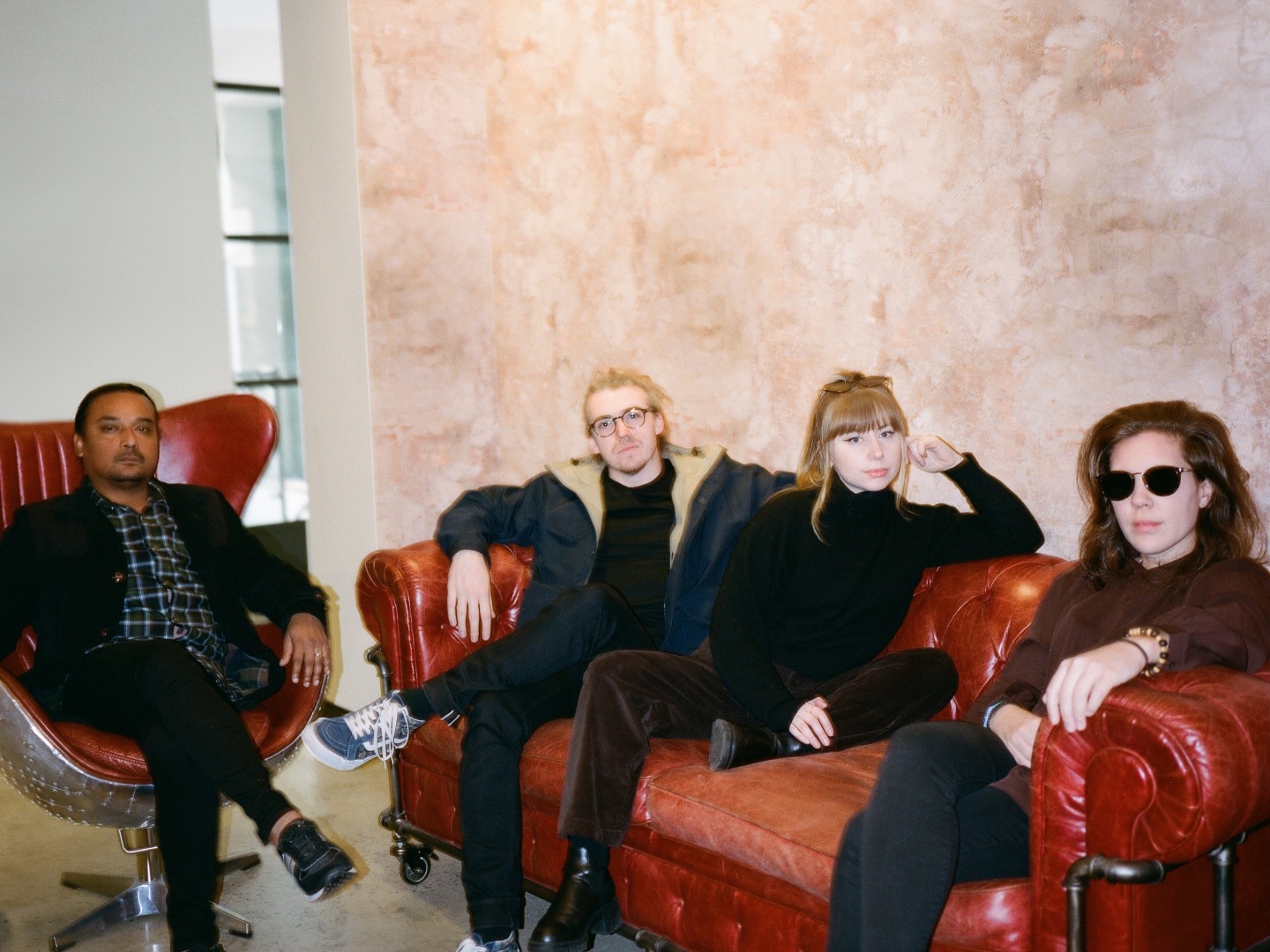
The Great Emu War Casualties have just released their new single, Donut, ahead of their debut album, Public Sweetheart No.1. Known for their blend of art-rock grooves, introspective lyrics, and playful humour, the Australian four-piece are carving out a space all their own in the indie scene. Vocalist and guitarist Joe Jackson spoke to us about the inspiration behind Donut, the creative process behind the album, and how their international experiences shaped the sound of the record.
Hi, thanks for talking to us - you’ve just released your new single ‘Donut’ - what was the inspiration behind the single?
The seed of the song really is in the chorus, where it’s like, “I still wonder what would have happened if I’d found the time to grow into a real boy,” and it’s a sort of lazy Pinocchio play kind of thing, but it’s in the sense of living a surface-level life and failing to live a real life, and trying to start to unpick the cause of that. Through referencing poor Helen and a couple of other people who will recognise themselves in the lyrics, I hope it comes across as an apology, really. I am gluten-free, I forgot all about the Max Watts show until I wrote this song, and I did drop ten grand on a visa, and I’ve never really financially recovered from that, or emotionally recovered from anything I’ve done, and so here we are, and there you have it.
Donut is featuring on your new album ‘Public Sweetheart No.1’ - where did the title of the album come from?
I don’t remember, because alcohol was involved, but I remember as the conversation went on, it became a strange description of me, and it wasn’t being used in a charming “ha ha” kind of way, but more an attack on who I have been throughout the latest chapter or phase of my life. Seeing as the songs on this record are particularly personal and recent, we started to use it as a temporary title for the record, and then one thing led to another, and before you know it, that’s the title forever!
What was the creative process like making the album? And how was it working with Wayne Connolly (The Teskey Brothers, Julia Jacklin)?
Creative process is a weird thing, because it’s never really the same, I guess, but then also everyone has ways and means of doing things. This album was a departure from our usual schtick for us, in the sense that the songs were predominantly driven by me and an acoustic guitar, so demos were coming out largely formed from my North Melbourne living room. In trying to recapture some of the emotion of those demos, we just decided in the end to not recapture anything and just have what we have, because that’s where the nice, lovely sadness was. All the acoustic guitars on the record are the demo acoustic guitars from the apartment. They were never re-recorded, and that was driven by Wayne, who felt he could hear the record inside of those moments. I tried to re-record some guitar in the studio, and he told me off for wasting his time.
So we tracked the drums and bass and electric on top of those, threw on some vocals, which were good and bad depending on my headspace and mood, and were ultimately saved by Cat’s vocal ability, and then keys, piano, percussion, and synth over the top. It was really nice, but it was fast and stressful. The entire album was made over, I think, eight days. I hope that doesn’t make it sound shit. It sounds really cool.
You’re from Australia but met Saskia in Liverpool before you formed the band - how have the different cultures influenced your songwriting?
I’m from Liverpool, where I met Saskia, who is from Sydney, and she played in my band in Liverpool on bass. That band split up, as bands do, and so we, with Elliot, started a new project, which was just to be stripped back and allow us to all fit in the car to tour. Then Elliot went to work on cruise ships, and Saskia’s visa expired, so we tried out Melbourne and met Bibek, who was originally a metal drummer from Nepal, and we rolled it into a big ol’ life from there!
So, probably in terms of different cultures and influences, Bibek’s has been the biggest departure, because while there are differences between the UK and Australian indie and alternative scenes, there is also a lot of crossover. Showing a guy who was raised on Nirvana how Chris Frantz plays the drums is a bigger departure. You’ll hear it in the rhythm section, and you’ll hear it in the mix treatment from Wayne, and you’ll hear it in my accent, and you’ll say, “What exactly am I listening to here?”
What’s the best advice you’ve ever received?
The best advice I ever received was mean but it was right. It’s happened to me a couple of times in my life where I’m just losing my mind and everything feels off and wrong and just not landing and stressful and so the best advice I’ve ever received I’ve received twice in these moments and it was just to quit. Put it down and stop and give up and let it go. Then, when you’ve done that, see what happens.
Both times, I’ve completely thrown my toys out of the pram, sent off all my demos, put my guitars away, bought running shoes, enrolled in a history course, changed the direction of my life, and found myself within 30 days back on the couch or in the corner or on the floor with an acoustic guitar in my hand strumming away because that creative spark and that feeling and the ability to express myself in that way is what centres me. Ultimately, as grandiose as it starts to sound, I find every time that this is what I live for. Trying to quit showed me that I was focusing on the wrong things. I wanted to quit because of commercial or economic or just scenester political based reasons. I can’t quit because music is what gives me the reason to breathe.
Describe your music in three words.
VIDEOGAME. SANDWICH. DIAMONDS.
If you could collaborate with any artist who would it be and why?
I read an interview once with the guy from LCD Soundsystem, where he talks about how he was hired to collaborate on a David Bowie record, and showed up and found himself wildly out of his depth in the studio, surrounded by these mammoths of talent. And so, he sat there for a couple of days on the couch, hanging around and making cups of tea. Then, on one of the songs, he changed an F to an Am, and later on agreed that was wrong and changed it back. Then he stopped going in and went home, and then found himself on the album credits anyway.
So, based on that, just send me in with Harry Styles for that new album he’s apparently working on, so I can be like, “Oh yeah, a tambourine would sound good there. No, like, maybe 8ths. Nah, I guess you’re right, it’s better without it.” And then I’ll buy a little B&B out on the coast with the proceeds when he tours the record.
You started out as a tribute act to Tenacious D, what music inspired you growing up and how did you find your way into creating your own band?
We didn’t, but I did. It was my first, or one of my first, bands when I was in school. I’d been playing guitar already for a long time in my teens, as I started when I was 8 years old, because my mum made me choose a hobby in order to make some friends, and so I chose a hobby and made no friends. And so, when I was in my teens, me and Alex Gordon in Mosslands High School started a Tenacious D tribute band, which grew into his screamo project, and so I grew a big long fringe, wore tight jeans, and thought I was amazing. And then one day I accidentally walked past a mirror and left it all behind forever.
As I’ve grown, I’ve found that the hardest thing to write is a real, honest account of something that has effected me deeply, and so I’ve figured that is also the only thing worth writing about.
Do you have any plans to come to the UK to perform live?
Dreams, yes. I’d love to be able to bring the band over and tour the record. I think everyone has put their very best into and it shows. It’s sad but it’s fun and it’s heartbreaking and it’s tongue in cheek and I really love it and of course I’m supposed to because I helped create it but it’s something we all really believe in. Plans? Go get me a booking agent and then we’ll talk, otherwise you’re all going to have to put up with me and an acoustic guitar in June and July of this year when I fly over to get day drunk for my Mother’s 70th birthday.
What do you hope to achieve in 2026?
I hope to achieve nothing. I have no expectations, and I’m done with dreaming. I sort of hope I’m able to prioritise getting a haircut, but then, at the same time, it’s not that important. Achievements are awkward in music, because a lot of people tie metric and performance to bits, but so much of that is out of the influence of a band like us, who are really just in it for the love of creation. And so, in 2025, I hoped to achieve the making of the album, and we did it, and it’s beautiful, and I love it. And so, in 2026, I hope to see the whole thing through and to achieve the release of the album, and I’ve done that now through AWAL, and I just need to wait. So, I hope to achieve the level of patience required to not just release the whole thing on Bandcamp anyway to anyone who wants to hear it, because what are reasons, anyway.


Log in with
or post as a guest
Be the first to comment.