

Shakira’s Ageless Presence Drives the Energy of the World Cup “Dai Dai” Video
 Write a comment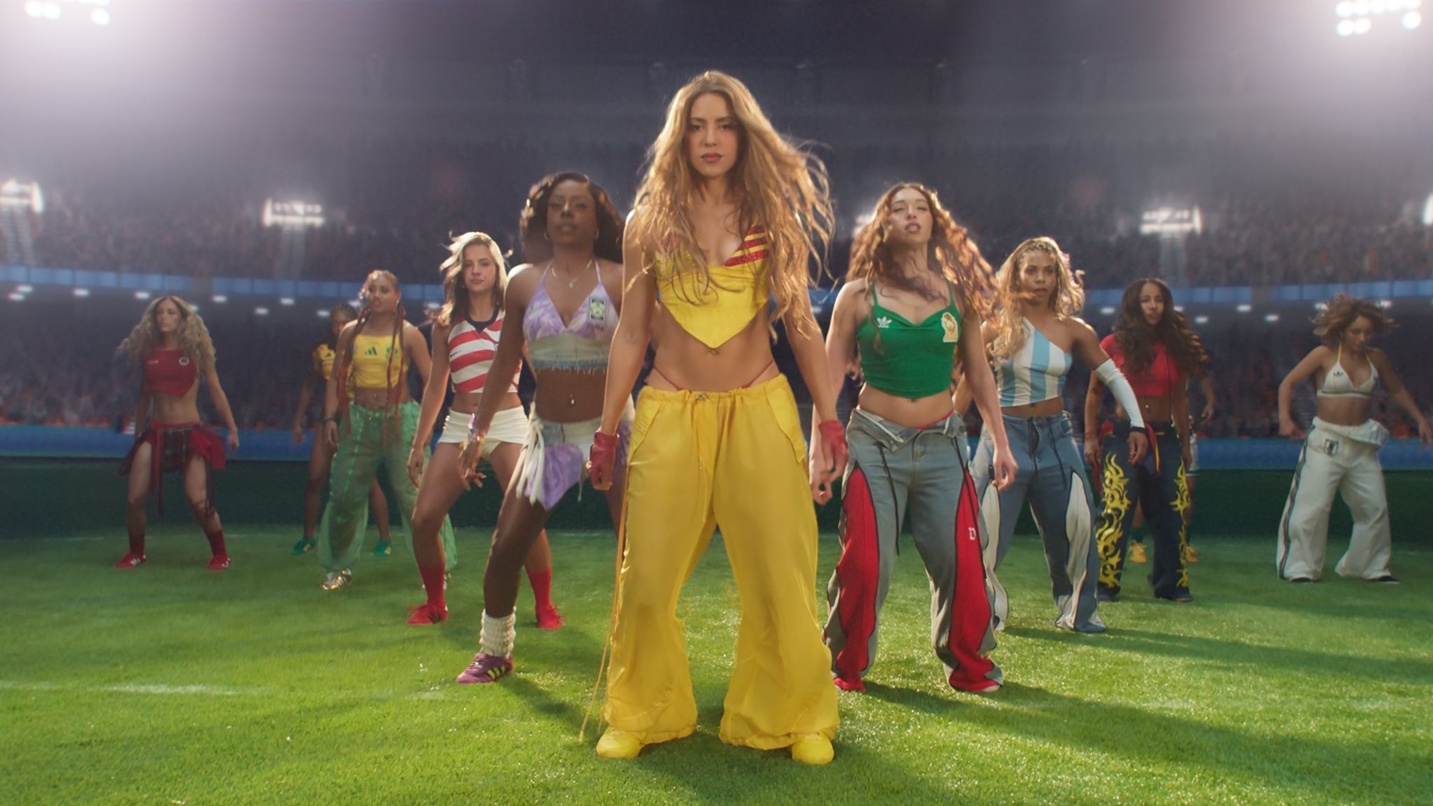
Shakira has built a career out of turning global sporting moments into pop culture events, and “Dai Dai” feels like another carefully calculated entry into that legacy. The official FIFA World Cup 2026 anthem, created alongside Burna Boy, arrives with all the scale and symbolism you would expect from a tournament that spans continents, cultures and generations of football fans.
The video opens with football’s biggest names delivering the simple statement, “We are ready.” Seeing figures like Lionel Messi, Harry Kane, Erling Haaland and Kylian Mbappé instantly gives the project a sense of occasion before the music even properly begins. Rather than feeling like disconnected celebrity cameos, the players are woven into the wider message of unity and anticipation ahead of the World Cup.
Visually, the video leans heavily into the kind of movement and choreography that made Shakira’s past World Cup songs so memorable. There are flashes that recall the carefree energy of “Whenever, Wherever” and “Hips Don’t Lie,” though this time the presentation feels more refined and mature. Shakira still moves with the same charisma that made her a global icon two decades ago, but the video avoids relying purely on nostalgia. Instead, it presents her as an artist who understands exactly how to evolve without losing the qualities that made audiences connect with her in the first place. Remarkably, she also still looks almost untouched by time. In an industry obsessed with reinvention, Shakira somehow continues to carry the same unmistakable energy and presence she had at the height of her early 2000s breakthrough, to the point where she genuinely never seems to age.
One of the strongest aspects of “Dai Dai” is how it visually links football with ordinary communities around the world. The sweeping shots inside Maracanã Stadium deliver the expected stadium spectacle, while the rustic neighbourhood and favela inspired scenes bring the focus back to street football and the way the sport lives far beyond elite arenas. The inclusion of Uganda’s Ghetto Kids gives the video real emotional weight. Their choreography injects joy and energy into every sequence, but their presence also quietly reinforces the wider charitable mission tied to the FIFA Global Citizen Education Fund.
There is also a surprising amount of symbolism throughout the production. Shakira standing atop Mexico City’s Angel of Independence immediately creates a sense of grandeur, while the recurring baobab tree imagery adds themes of resilience, heritage and interconnectedness. Even the cosmic scenes, where she appears on top of a glowing globe beneath a star-filled sky, avoid feeling overly theatrical because they tie back into the song’s message of global unity.
Musically, “Dai Dai” succeeds because it understands what a World Cup anthem needs to do. It has to be simple enough for millions of people to chant together while still sounding contemporary. The multilingual hook, “Dai, dai, ikou, dale, allez, let’s go,” is undeniably engineered for stadiums, social media clips and fan celebrations, but it works because of its rhythm and immediacy. The mix of English, Spanish, Italian, French and Japanese reflects the increasingly international nature of football culture without sounding forced.
Burna Boy’s contribution is equally important. His Afrobeats influence gives the track a modern pulse that separates it from older FIFA anthems that leaned more heavily into traditional pop structures. The fusion of Latin pop and Afrobeats feels commercially smart, but also culturally reflective of where global music is right now. Spanish language music continues to grow rapidly in English-speaking markets like the UK, while Afrobeats has become one of the defining international sounds of the last decade. “Dai Dai” understands both shifts and merges them naturally.
The video’s pacing mirrors the song itself, rapidly switching between warm earthy visuals, bright national colours, stadium lighting and dance-heavy choreography. Backup dancers dressed in colours inspired by different national flags reinforce the feeling that the tournament belongs to everyone, not just the host nations.
What ultimately makes “Dai Dai” work is that it feels less cynical than many modern sporting anthems. Yes, it is polished and commercially designed, but there is still genuine warmth running through it. The scenes of Shakira dancing with children, the focus on community football and the educational fundraising campaign behind the project stop it from feeling like empty corporate branding.
It is easy to see why the song has already climbed into the top 10 on trending platforms. It has the ingredients FIFA always looks for in a modern anthem: instantly recognisable stars, a chant built for stadium crowds, strong visuals and a message broad enough to resonate globally. More importantly, it also manages to capture the emotional side of football, the idea that the sport can briefly connect completely different people through the same shared energy.


Log in with
or post as a guest
Be the first to comment.