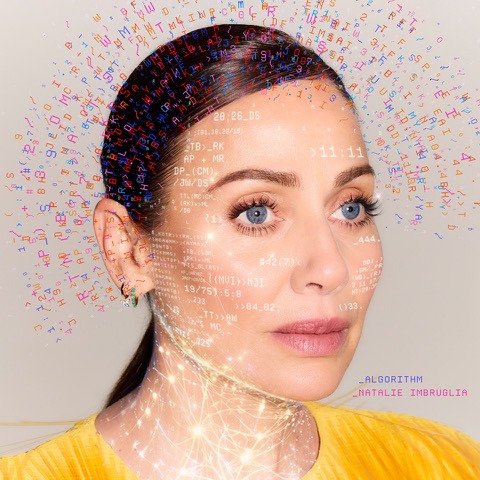
For an artist who has spent almost three decades being closely associated with one of the biggest pop songs of the 1990s, Natalie Imbruglia has every reason to play it safe.
Instead, on Algorithm, her new album arriving this Friday, she appears to have done almost the opposite.
There is a strange moment that happens when listening to Algorithm for the first time. You spend the opening tracks waiting for something familiar. Maybe a guitar, perhaps a vocal melody that takes you back to Torn, or at least something that sounds unmistakably like the Natalie Imbruglia of the late 1990s.
It does not really come.
What arrives instead is an album full of synths, electronic beats, glitchy production, disco influences, dream pop, industrial textures, trance and even indie folk. At times it sounds futuristic. At others, deliberately retro. And occasionally, it sounds like an artist having quite a lot of fun tearing up the rulebook.
That makes Algorithm one of the more unexpected pop albums of Imbruglia's career.
The album had already begun revealing its intentions before its release. Upside Down, released in April, is an upbeat, shimmering piece of electronic pop with a distinctly late-1990s and early-2000s feel. It has that familiar synth-driven pulse, but it does not feel like an attempt to recreate the past. Instead, it feels like Imbruglia taking elements of that era and pushing them into something more contemporary.
Then came Algorithm, the album's title track, and arguably the biggest indication that this was not going to be a straightforward nostalgia trip.
Algorithm is built around dark, electronic, mid-tempo beats that give the impression of being trapped inside a digital machine. The song tackles doom-scrolling, internet rabbit holes and the uneasy question of how much control we actually have over the algorithms shaping what we see.
In the middle of the song, things become even stranger. The music gives way to a bizarre spoken-word section in which Imbruglia mimics the meaningless chatter of dating profiles and social media feeds, complete with the sort of random, surface-level questions that feel increasingly familiar in the digital age.
It is an odd choice, but an effective one.
Most importantly, it is the sort of thing you would probably never expect to hear from the woman who recorded Torn.
And that is exactly the point.
Debbie takes another turn. Dreamy and retro, it mixes electro-pop with a slightly glitchy aesthetic and even throws in some unexpected whistle sounds. There are moments where the track has a faintly Kate Bush-esque quality, although the overall sound is much more rooted in modern electronic pop.
There is also something clever about the timing. The 1980s sound has been firmly back in mainstream pop for some time, from the work of The Weeknd onwards, and Debbie feels like it could comfortably sit within that resurgence without sounding like an imitation.
Catastrophe opens with another striking change of direction. Its moody retro synths and vinyl-flutter effects initially bring to mind the atmosphere of The Weeknd's Starboy, before the song suddenly shifts into a handclap-driven disco-pop number. Clean, rhythmic electric guitar picking adds another layer to what becomes one of the album's more immediately accessible moments.
It is a pattern that continues throughout Algorithm. Just when you think you have figured out where the record is going, it changes direction.
Sounds Like It Feels provides a gentler moment, moving towards dream pop and giving the album some breathing room. Then comes Jesus on Mars, which sounds less like conventional pop and more like something lifted from a futuristic sci-fi soundtrack.
The track has a cyberpunk quality, driven by heavy, gritty basslines and a playful sense of humour. Imbruglia turns the song into something resembling a futuristic confession booth, using clever lyrics to explore her own quirks and OCD in a way that is surprisingly playful.
Then, just when it seems like the album has exhausted its supply of unexpected ideas, Who Dimmed the Lights arrives.
The industrial electronic textures disappear and are replaced by acoustic instrumentation and banjo-driven indie folk. The subject is perimenopause, which makes the track even more of a departure from what you might expect from Imbruglia.
It could have been an awkward stylistic experiment. Instead, it adds another dimension to an album that seems determined not to sit comfortably inside one genre.
Endgame brings the record back towards familiar territory. The futuristic synths are stripped away in favour of a sweeping, cinematic ballad, and it is perhaps the closest Algorithm gets to the Natalie Imbruglia many listeners will remember from the late 1990s.
That makes its position on the album particularly effective. After all the experimentation, there is finally something that feels recognisable.
Just Drive, meanwhile, has a distinctly Robyn-like quality. It is sleek, electronic and built for a late-night drive with the lights of the city passing by. The song's breakup theme fits its title perfectly, giving the track an almost cinematic quality.
Then there is Breathe With the Fire Lola, an Ibiza-inspired dance track that pushes further into trance and electronic territory. Rather than sticking to a conventional pop structure, it builds around an electronic groove that feels designed for a summer club rather than a traditional radio playlist.
Even its opening is unusual, beginning with a reversed audio sample that creates an uneasy sensation before the techno-pop rhythm arrives.
And then comes Beautiful Love.
Released as the final single ahead of the album, the track serves as the grand closing statement. It is a soaring, synth-led dance-pop anthem, but where some of the album's earlier electronic production feels tense, glitchy or claustrophobic, Beautiful Love opens everything up.
The melodies become wider and more euphoric. The electronic pulse remains, but the anxiety that runs through parts of the album gives way to something much more optimistic.
It is a fitting conclusion to a record that has spent much of its running time exploring technology, identity, anxiety and the strange world modern life has created.
The biggest question, however, is not whether Algorithm is good.
It is whether people will actually hear it.
There is a huge section of the general public that still associates Natalie Imbruglia almost entirely with Torn. For many casual listeners, her name immediately conjures up acoustic guitar, 1990s pop-rock and the era of Left of the Middle.
If those listeners stumbled across Algorithm without knowing who had made it, there is a very good chance they would be surprised.
That is both the album's biggest strength and potentially its biggest problem.
Imbruglia has made a record that shatters the idea of her being a predictable legacy act. She has instead positioned herself as a contemporary electronic pop artist willing to experiment with sounds that many artists at this stage of their career would probably avoid.
The irony is that the people who might love Algorithm most may be the people least likely to listen to it.
Someone who loves Robyn, Róisín Murphy, St. Vincent or more adventurous electronic pop might never think to click on a new Natalie Imbruglia album. They might assume it is going to be a collection of nostalgic guitar-pop songs.
That assumption would be wrong.
There is a genuine opportunity here for Algorithm to become a sleeper hit. Not necessarily a huge mainstream comeback in the traditional sense, but an album that finds a second audience among people who would never have considered themselves Natalie Imbruglia fans.
Whether that happens will depend on whether listeners can leave their preconceptions at the door.
Because Algorithm is not really an attempt to bring Natalie Imbruglia back to where she was.
It is an attempt to show that she never had to stay there in the first place.
And perhaps the most surprising thing about the album is that, nearly 30 years after Torn, Imbruglia has managed to make a record that sounds less like an artist looking backwards and more like one discovering what she can do next.
Author: Andrew Braithwaite
Andrew is the founder and chief editor of Music Talkers. He's also a keen music enthusiast and plays the guitar.


 1 Comment